
Stucco Contractor in Siesta Key, FL Built for Life on a Barrier Island
Siesta Key is a barrier island, and its walls pay for the view. Buildings here take direct salt spray, wind-driven rain off the Gulf and humidity that keeps surfaces damp for hours at a time. A finish that would give you fifteen good years in central Sarasota can be showing its age here in half that.
Coastal Stucco and EIFS Work Across Siesta Key, FL
We have worked island exteriors for more than 15 years, and Siesta Key is a short run for us over the Stickney Point bridge. Our work here covers the low-rise and mid-rise condominium buildings along Crescent Beach and Midnight Pass Road, the older single-family homes and cottages around Siesta Key Village, the quieter bayfront and canal properties down near Turtle Beach, and the larger estates at Roberts Point and Sanderling.
The island is not one environment. A Gulf-front condominium on Crescent Beach and a canal home on the bay side are exposed to very different amounts of salt, and they need different finishes and different maintenance intervals. We survey the specific elevation rather than pricing the island as a single job.
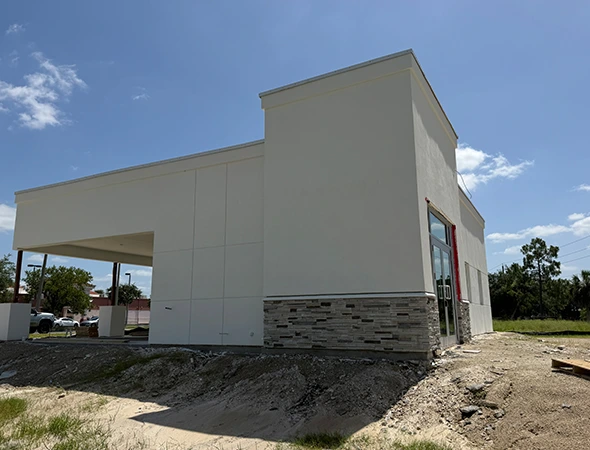
Our Stucco Services in Siesta Key
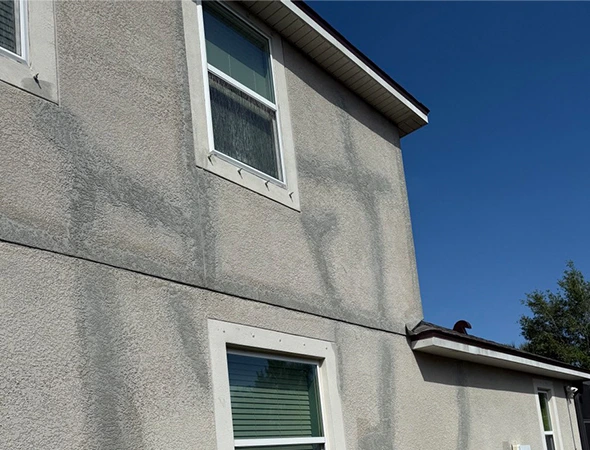
What Does Salt Air Actually Do to Stucco on Siesta Key?
It attacks the metal inside your wall, not the surface you can see. Stucco is porous, so airborne chlorides work into it and reach the metal lath, fasteners and flashings behind the finish. Normally the alkalinity of the cement protects that metal. Chlorides break down that protection, the metal starts to corrode, and corroding steel expands. That expansion cracks and delaminates the stucco from the inside out, which is why island walls often fail in patterns that make no sense if you assume the damage started on the outside.
Salt also causes surface pitting and the chalky white staining called efflorescence. Humidity makes all of it worse, because corrosion needs moisture and a wall that stays damp for long stretches gives it plenty. The distance effect is steep. Airborne salt deposition falls off sharply as you move inland from open water, so a Gulf-front elevation and a property a few streets back are genuinely in different exposure categories. On Siesta Key almost nothing is far enough back to escape it entirely, which is why coastal stucco restoration across a full elevation tends to outlast patching here.
How Much Harsher Is Siesta Key on a Building?
Measurably harsher, and the standards that engineers use say so. International corrosivity standards rate atmospheres from mild through to the most severe category, and open coastline with onshore winds sits in that top band. The driver is chloride deposition combined with time of wetness, meaning the hours each year when humidity stays above 80 percent. Gulf Coast Florida delivers both in quantity. Deposition drops off exponentially with distance from open water, which is why a mainland property a few miles inland is in a completely different category from a beachfront one, and why island exposure cannot be compared to it.
Siesta Key also carries regulatory layers the mainland does not. The state Coastal Construction Control Line runs along the Gulf side of the island, and on many parcels it crosses the middle or rear of the lot, with older homes sometimes straddling it. Sarasota County adds its own Gulf Beach Setback Line, which is stricter still. Much of the island sits in FEMA AE and VE flood zones, and substantial improvement rules can affect how much work you can do before wider requirements are triggered. None of that stops routine stucco maintenance, but it is worth knowing before a project grows. The same applies to EIFS repair and recoating, which matters here because a good share of the island’s condominium and resort buildings are clad in it.
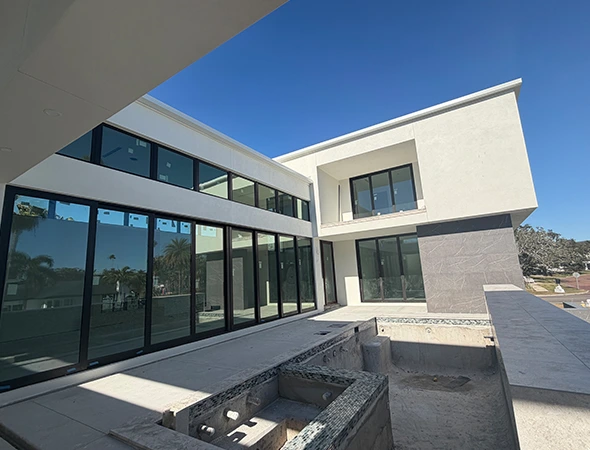
Does Your Position on the Island Change What Your Walls Need?
It changes it more than most owners expect. Salt exposure drops sharply with distance from open Gulf water, so two Siesta Key properties a few hundred yards apart can be on completely different maintenance schedules. Use the guide below as a starting point, then let an inspection confirm where your building actually sits.
| Position on the Island | Salt Exposure | What Tends to Show Up First | Sensible Inspection Rhythm |
|---|---|---|---|
| Gulf Front, Direct Spray | Severe | Efflorescence, surface pitting, rust staining, cracks tracing the lath lines | Check yearly and after every named storm |
| Within a Few Streets of the Gulf | High | Cracking at window corners, failing sealant, early finish chalking | Check yearly, focus on west-facing walls |
| Mid-Island and Village Area | Moderate | Normal weathering plus salt effects on exposed corners and parapets | Check every year or two |
| Bay Side, Canal and Turtle Beach | Moderate to lower | Slower deterioration, though humidity and wind-driven rain still apply | Check every two years |
FAQs
Do I need special coastal approval for stucco work on Siesta Key?
Routine repair and refinishing normally goes through standard Sarasota County permitting where a permit is needed at all. It gets more involved if your property sits seaward of the Coastal Construction Control Line or inside the county’s Gulf Beach Setback Line, and larger projects can trigger extra structural review. We check where your parcel sits relative to those lines before we start rather than after.
Why did my last repair only last a few years?
Almost always because the corroded lath behind the finish was left in place. On the coast the metal inside the wall is usually the thing that failed, and covering it with new stucco does not stop it expanding. The repair looks fine for a season or two, then the same crack reappears in the same line. A durable island coastal stucco repair means cutting back far enough to replace the affected metal.
How often should a Gulf-front building be inspected compared with a mainland one?
Roughly twice as often. A mainland Sarasota property can reasonably go a couple of years between exterior checks. Direct Gulf frontage warrants an annual look and another after any named storm, since wind-driven salt spray during a storm delivers in hours what normal conditions take months to deposit.
Our condo association needs exterior work. Can it happen outside season?
That is usually the right call, and we schedule island association work around it. Peak season and rental turnover make access difficult and make disruption expensive for owners renting units. The trade is weather: quieter months are generally better for curing, but hurricane season overlaps the low season, so we build the schedule around both rather than one.
Does the 50 percent rule apply to exterior stucco work?
Not to ordinary maintenance. Repair, refinishing and restoration are normally straightforward. The rule matters when the value of improvements to a structure in a flood zone reaches a substantial share of the building’s value, which can bring wider compliance requirements into play. It rarely bites on a stucco project alone, but it can if your exterior work is part of a larger renovation. Worth checking early.
Want to Know How Your Island Walls Are Really Doing?
Salt damage builds behind the finish, so the surface is a poor guide. A free inspection tells you whether the metal inside your walls is still sound and how long your current finish has left. Owners, boards and property managers all welcome.